
Practical AI Consulting.
Help your team understand where AI actually fits, build workflows that deliver measurable value, and develop the skills needed to use modern tools with confidence. Less hype, more systems people will actually adopt.
Cut through the AI noise.
Most organizations don’t have an AI problem. They have a clarity problem. New tools appear daily, expectations are high, and teams are left wondering what actually matters.
We help organizations separate what’s genuinely useful from what’s merely interesting. That means practical workflows, thoughtful implementation, and training that helps people get more out of the tools they already have.
We’re practitioners first. We use AI tools and workflows every day in our own work. We’re not selling ideas we don’t use ourselves.
Start with where AI actually helps.
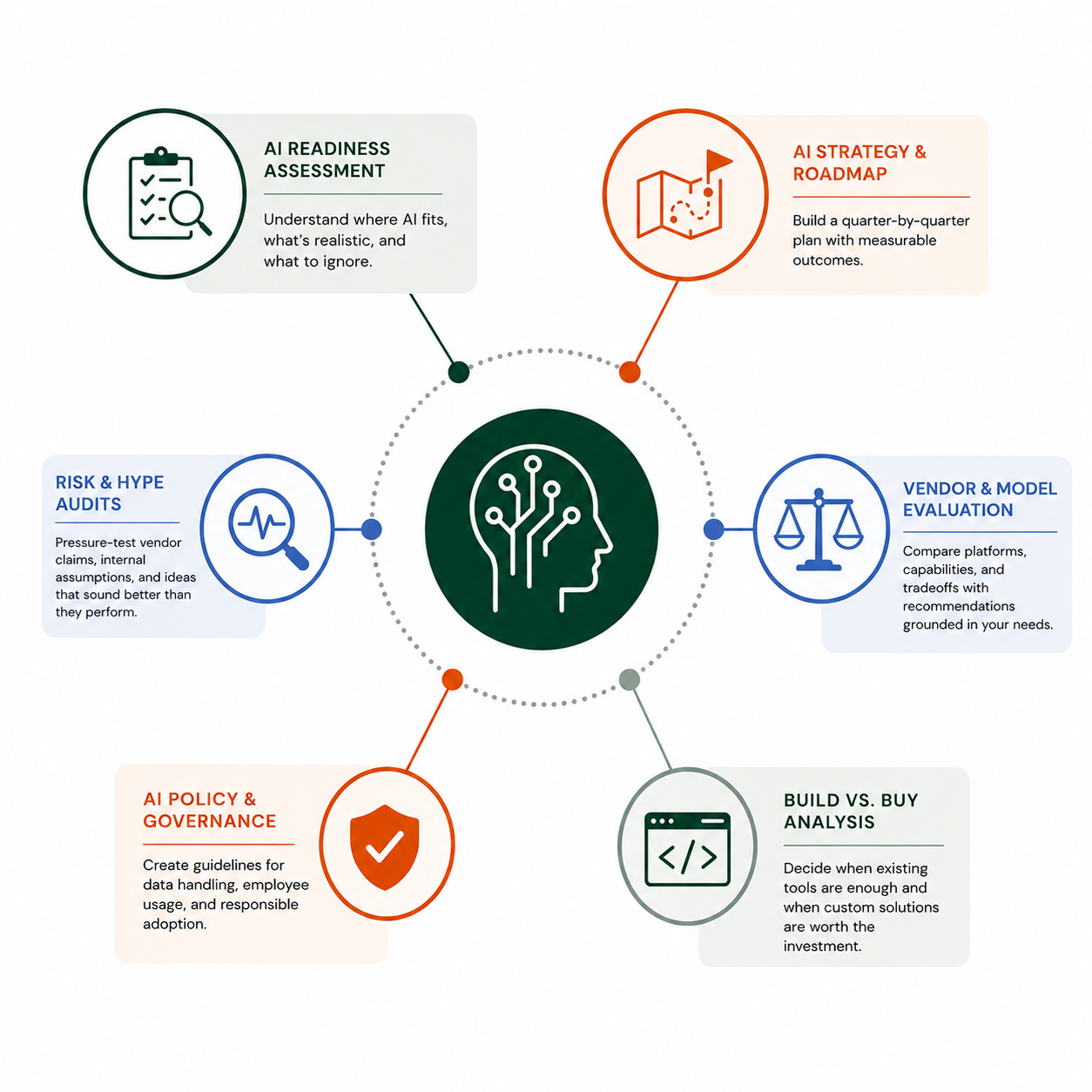
We begin with a practical assessment of your people, processes, and goals, then provide a plain-language roadmap that identifies where AI can create value, where it’s likely to disappoint, and what makes sense to tackle first.
The goal isn’t to adopt AI everywhere. It’s to apply it thoughtfully.
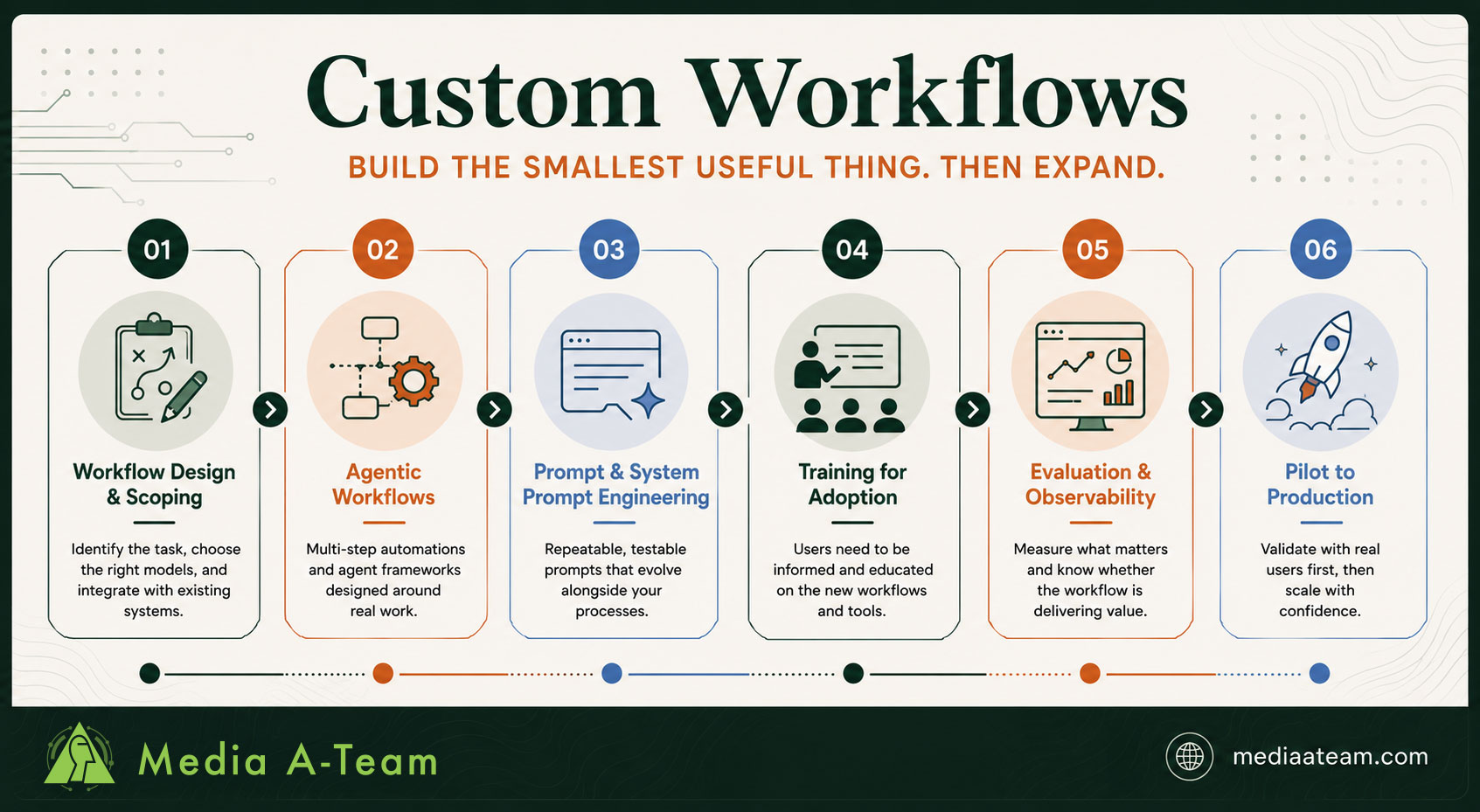
Build the smallest useful thing. Then expand.
Most AI projects don’t fail because the technology is bad. They fail because they try to solve too much, too soon. We prefer to start with a single, high-value workflow, implement it end to end, train the people who’ll use it, and expand from there. Real adoption beats impressive demos.
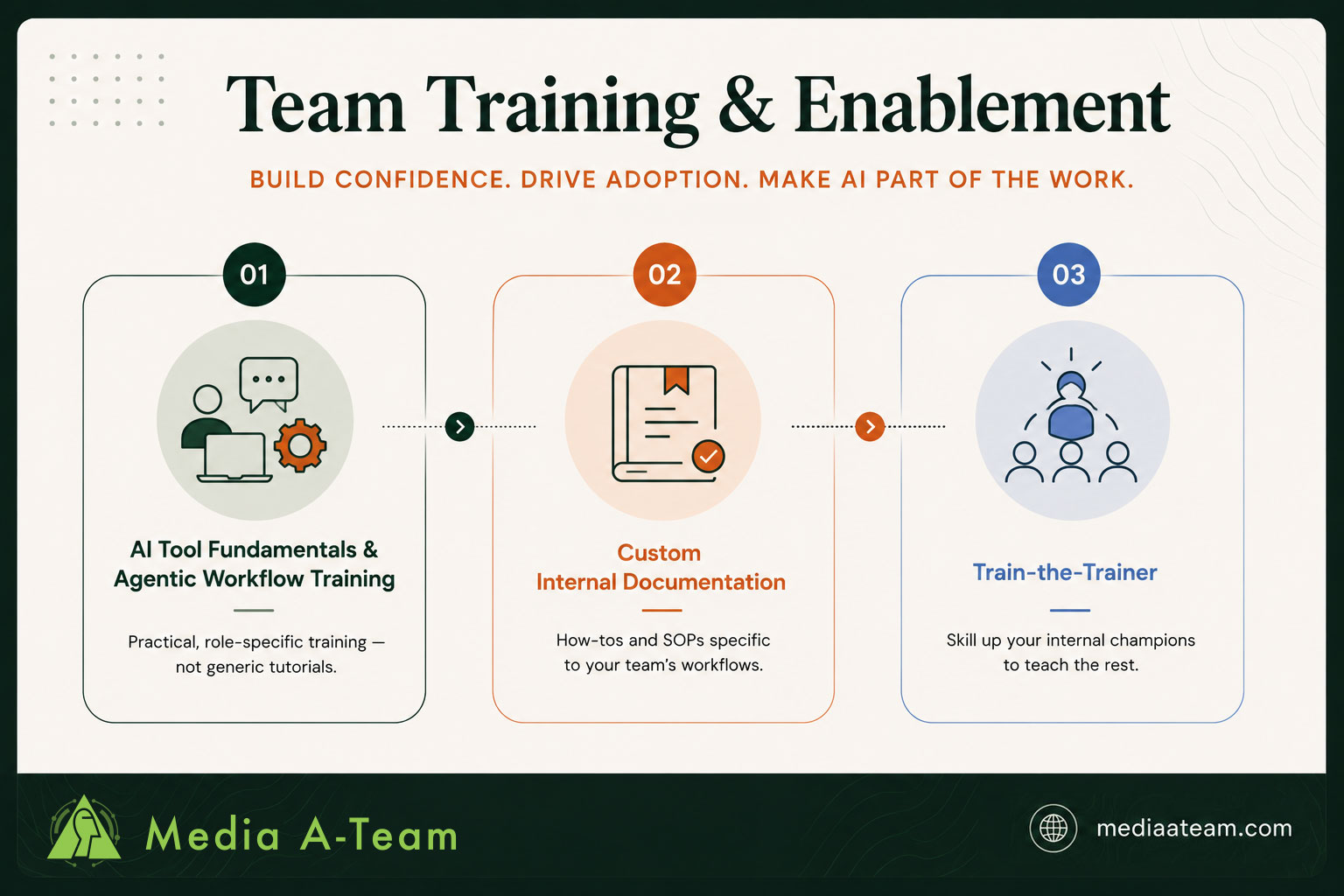
Adoption matters more than features.
Buying a tool is easy. Changing how people work is harder. That’s why we focus on practical training and real-world workflows instead of demos and slide decks. Because successful AI projects aren’t measured by licenses purchased. They’re measured by habits that change and work that gets easier.
Four fundamentals we keep coming back to.
Technology changes quickly. Good judgment changes more slowly. Twenty-four years of building software and several years of applying AI in real work have reinforced a handful of principles that help us decide what’s worth building, what’s worth improving, and what should probably be left alone.
Start with the work, not the technology.
We don’t begin with, “How can we use AI?” We begin with, “What is your team trying to accomplish?” The workflow outcome is the most important. The technology follows.
Build the smallest useful thing.
Start with one workflow, real users, and real data. Learn what changes. Then expand. Big demos are easy. Lasting adoption is harder.
Train the people who’ll use it.
A workflow only matters if people use it. Training isn’t an afterthought. It’s what turns new tools into everyday work.
Separate signal from noise.
The pace of change is fast, and so is the pressure to keep up. We help clients separate signal from noise and focus on where AI can create real value. And when the right answer is “not yet,” we’ll say that too.
Start small, prove the value, and expand from there.
There’s no single recipe for AI projects, but most engagements settle into one of four patterns. They’re meant to be flexible, and we’re happy to mix them when the situation calls for it.
AI readiness assessment
We look at your operation, talk with the people doing the work, and deliver a plain-language report on where AI fits, what’s realistic, and what to tackle first. Optional review session included.
Custom workflow build
Design, build, test, train, and deploy a single high-value workflow. Start small, prove the value, and expand from there.
Team training workshop
Hands-on sessions covering your custom agentic workflows and AI fundamentals. Practical, role-specific training built around your team’s actual work.
Ongoing advisory
Strategy conversations, model evaluations, workflow reviews, and support for your team. A flexible way to add an experienced outside perspective without adding headcount.
AI Tools That Have Earned Their Place
These are the tools we reach for most often because they’ve served us and our clients well. But we’re not particularly attached to any one platform. The right tool for the workflow will always beat the comfortable one we’ve used before.
Start with the problem.
Maybe leadership wants an AI strategy. Maybe there’s a workflow that should be faster. Maybe your team just wants help making sense of the tools. Start with a conversation. We’ll be honest about whether we’re the right fit, and we’ll tell you when the answer is, “You don’t need AI here yet.”